Planning for the unexpected
12th June 2024
How can the concept of ‘decent work’ create a thriving and sustainable building industry in the Western Cape?
7th July 2024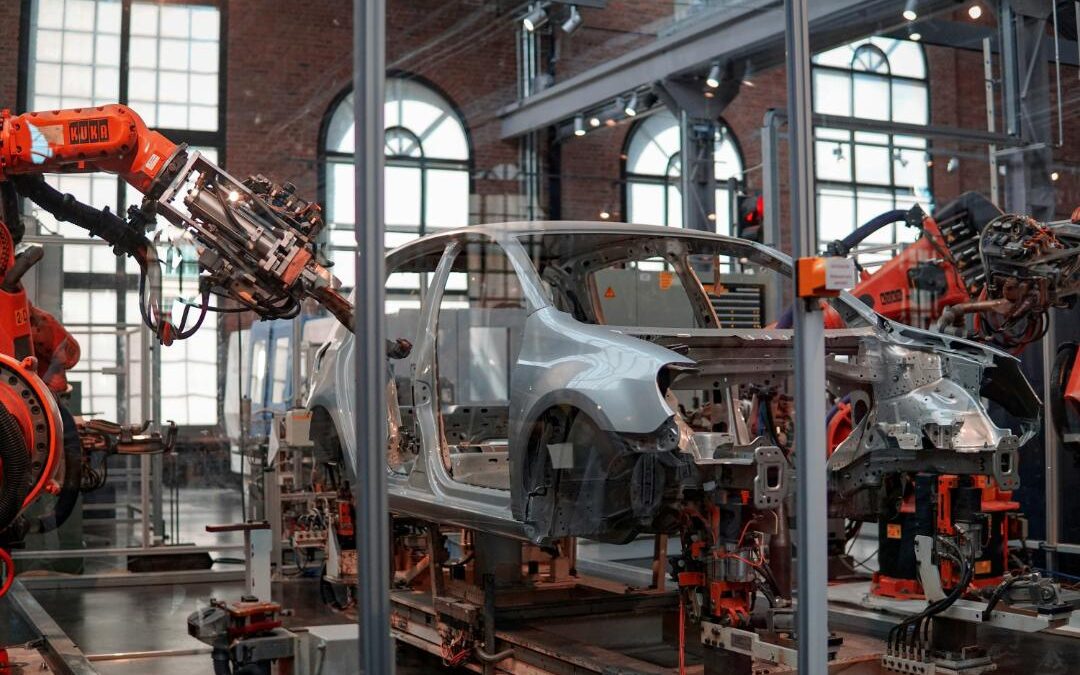
ISO standardisation experts believe business owners are missing out on practical benefits
Johannesburg, 2 July 2024 – A report published by market research specialist In On Africa in August last year presented some interesting insights about AI adoption in South Africa.
In a survey of more than 3,000 South Africans working across various industries, 59% stated that they knew about ChatGPT but only 38% had used it previously.
Those who had never used the generative AI chatbot offered several reasons for not making it part of their day-to-day operations. More than half said they did not know enough about it (53%), 20% said they had never needed to use it, 14% did not know what the technology did, and 11% were apprehensive about AI.
Concerns about AI adoption in South Africa are largely based on the country’s high unemployment rate and fears that AI would hurt, not help, efforts to reduce joblessness.
“There is a resistance to change and huge insecurity around jobs being lost due to the efficiencies machine learning and AI bring to the market,” says Muhammad Ali, managing director of South African ISO specialist World Wide Industrial & Systems Engineers (WWISE).
While these concerns do have merit, Ali suggests these technologies should not be viewed as job replacements but as job enhancers. If mundane and repetitive tasks can be performed by AI and machine learning, employees will be freed up from endless data capturing to focus more on strategy and analysis.
In this way, not only are costs saved and human resources allocated to parts of the business where their skills could be put to better use, but a machine’s ability to collect quality and accurate data can lead to better and more informed decision-making.
The advent of AI and machine learning in operations essentially compels employees to upskill themselves, which brings obvious advantages to companies. More effective workers make for better businesses which in turn leads to higher profit margins.
“At WWISE, we search through 3,000 websites in 10 minutes with an AI tool every day, simply by using keywords. Previously, a human resource could only do 20 websites a day. The AI and ML tools assist in managing repetitive tasks more efficiently and allow human resources to focus on more challenging tasks that empower them and enrich their ability to learn and grow,” Ali says.
It is interesting to note what South Africans who have embraced ChatGPT are using it for. According to the In On Africa report, 53% of respondents employ the chatbot to improve their writing, 43% to enhance research and analysis, 42% to create content and 40% to resolve general problems.
Sixty-four percent agree that it has increased speed, efficiency and productivity at work.
Given that many South African companies deal a lot with counterparts in other parts of the world – most of which have integrated these technologies into their operations – AI and automation adoption must align with international standards and best practices.
Subscribing to standards set out by the International Organisation for Standardisation (ISO) is crucial in this regard, Ali says, particularly since cybercrime is extremely prevalent in most parts of the world.
“The ISO/IEC 42001:2023 – Information Technology – Artificial Intelligence Management System is the international standard of choice for organisations looking to develop AI and machine learning use and management.
“This safeguards organisations by ensuring they are not compromised from a security perspective and addresses the unique challenges AI poses, including ethical considerations, transparency and continuous learning.”
Ali says it is now a case of when, not if, businesses introduce these technologies into operations. Just as AI is now part of the search function on Meta products, so it will be with other business products, as has already been seen with Microsoft Copilot.
“The sooner we accept this, the better, and it is up to organisations to educate staff on effective implementation.”
Word Count: 624
About WWISE
Launched in 2009, Centurion-headquartered WWISE employs 35 full-time consultants who specialise in more than 40 industries, both locally and abroad, training and implementing ISO standards and programmes for a broad range of small, medium and large-scale businesses and organisations. The company has a solid local and international client base, with 740+ clients in 18 countries, implementing more than 30 standards and achieving a 100% record when clients are certified. Its training programmes are accredited with SAATCA, SETA, NEBOSH and various international bodies, and it offers an e-learning portal through which 56,000+ delegates in 40 countries have been trained so far.
The 70-year-old International Organization for Standardization (ISO) is an independent, non-governmental international body that develops business management standards to ensure the quality, safety and efficiency of products, services and systems across many industries. It aims to uphold consistency and quality in an increasingly globalised marketplace.