Motor Industry Employers Warned After Landmark Tribunal Ruling on Unpaid Contributions
14th May 2026
Cyber-Fraud in Africa Is Set to Surge in 2026 – Are Supply Chains Ready?
19th May 2026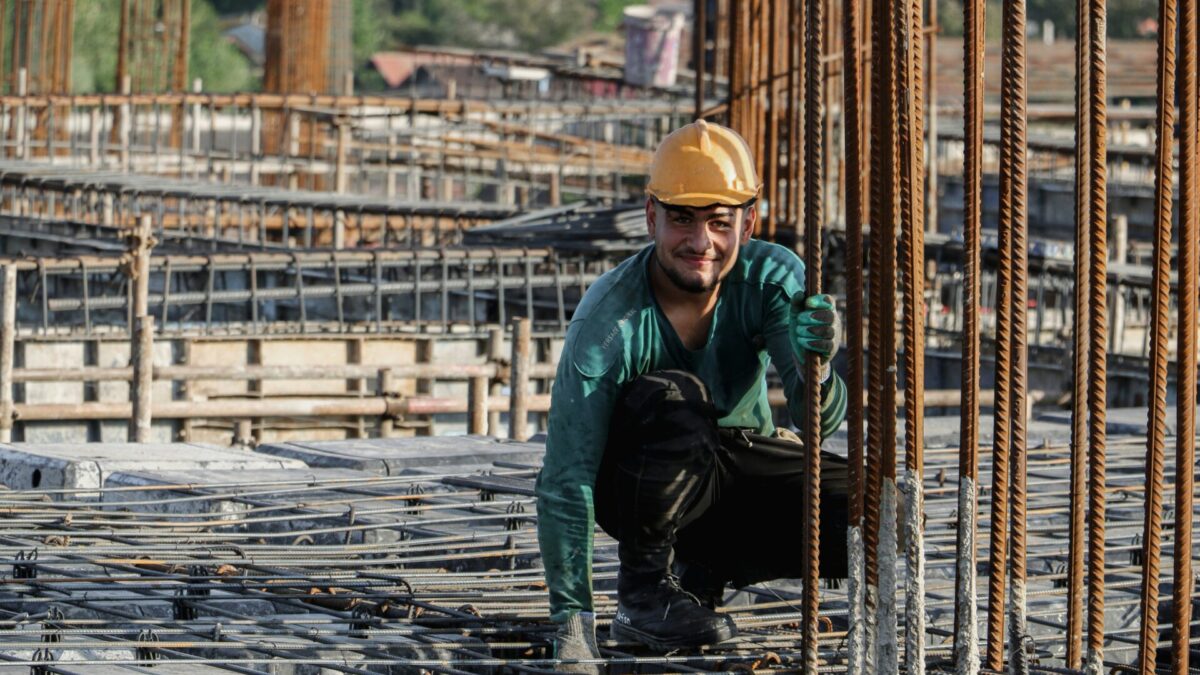
Cape Town, 19 May 2026 – Calls to reduce ‘red tape’ in South Africa’s building sector have become increasingly common, often framing regulation and labour protections as obstacles to growth. But according to the Building Industry Bargaining Council (BIBC), Cape of Good Hope, the conversation has become increasingly blurred, with important distinctions being lost between unnecessary bureaucracy and appropriate industry regulation.
For Danie Hattingh, spokesperson for business at the BIBC, the issue is not whether regulation should exist, but whether it is balanced, practical and capable of protecting both economic sustainability and human dignity.
“There is a difference between inefficient bureaucracy and appropriate regulation,” says Hattingh. “One creates unnecessary obstacles. The other creates predictability, accountability and fairness, which are essential in a sector like construction, of which the building industry forms a significant part.”
Established under the Labour Relations Act, the BIBC’s role includes supporting fair labour practices and contributing to policy discussions affecting the building sector. Hattingh says the council recognises that excessive administrative burdens can place pressure on small businesses, particularly in a difficult economic climate. However, he cautions against the growing tendency to label all regulation as ‘red tape’.
“There are practical and economically viable reforms South Africa can implement to ease compliance pressure on low-risk small businesses,” he says. “But reducing unnecessary burdens should never mean removing core protections relating to worker safety, fair wages or basic employment standards.”
The distinction matters because construction and building remain one of the country’s most labour-intensive industries, capable of absorbing large volumes of entry-level workers while also creating pathways into skilled trades such as plumbing, bricklaying and electrical work.
At the same time, the sector continues to face serious challenges relating to labour exploitation, informal employment and unsafe working conditions. According to Hattingh, these issues are often closely linked to attempts to cut costs through unregulated labour practices.
“The pressure of rising business costs is real and cannot be ignored,” he says. “But exploitation cannot become the solution to complex economic problems.”
Hattingh says that one of the most concerning trends is the growing use of undocumented and highly vulnerable workers through informal labour networks and labour-only subcontracting arrangements.
In a recent joint enforcement operation involving the Department of Home Affairs and the Border Management Agency, a large upmarket residential development site was found to have 248 workers on site, 211 of whom were foreign nationals.
“The concern is not about nationality,” Hattingh explains. “It is about exploitation and the creation of a labour market built around vulnerability, where workers are underpaid, unprotected and easily replaced.”
He says the consequences extend beyond workers themselves. Informal labour practices frequently result in poor-quality workmanship, unsafe sites, unstable subcontracting chains and businesses that struggle to survive long-term.
“There are no examples anywhere in the world where exploitation consistently produces high-quality outcomes,” says Hattingh. “In construction and building especially, poor labour conditions and poor building standards usually exist together.”
He points to international examples where weak regulation and inadequate oversight have contributed to broader industry failures. Melbourne, Australia, has become one such case study, where widespread concerns around poor-quality construction, subcontracting abuses and weak enforcement mechanisms have had major implications for property owners, insurers and the wider economy.
Reports from the Australian construction sector have highlighted issues ranging from unsafe worksites and unlicensed labour hire to supply-chain exploitation and significant structural defects in residential developments.
“The lesson from international examples is not that regulation should disappear,” says Hattingh. “It is that appropriate regulation, properly enforced, creates stability and trust in the market.”
The BIBC argues that regulation also provides predictability for responsible employers operating within the formal economy. Under the council’s collective agreement, the lowest-paid category of building workers earns above the National Minimum Wage and receives additional protections including sick pay, annual leave, bonuses and pension benefits.
Hattingh says these frameworks help create sustainable businesses and more stable labour markets over time.
“A sustainable building industry depends on balance,” he says. “Businesses need room to grow and innovate, but workers also need protection and fair conditions. Those objectives are not mutually exclusive.”
The broader challenge is ensuring that debates around economic growth do not reduce regulation to a simplistic argument between restriction and deregulation.
“The building industry plays a vital role in economic growth, skills development and employment,” says Hattingh. “Appropriate regulation is not there to prevent growth. It is there to create an environment where growth is sustainable, ethical and beneficial to everyone involved.”
Word Count: 737
About the Building Industry Bargaining Council (BIBC):
Established by employer organisations and trade unions in the Western Cape’s building industry, the Building Industry Bargaining Council (BIBC) serves as a collaborative platform where both parties negotiate terms and conditions of employment through collective bargaining. Current members include the Master Builders Association Western Cape (MBA WC); MBA Boland; Consolidated Employers Organisation (CEO); Building, Wood and Allied Workers Union of South Africa (BWAWUSA); Building Workers’ Union (BWU); and the National Union of Mineworkers (NUM).
The Council promotes stable labour relations and contributes to a fair, just, and prosperous building industry by ensuring that workers receive agreed wages and benefits such as pensions and leave and that industry standards are maintained.